
Ollie AAC
Founded ollie and built the only AAC that uses smart generation to save time and improve communication—personalized to grow with you—on iPhone and iPad.
- Industry
- — AI, Health, Accessibility
- Website
- — ollieaac.com
Tools & technologies
The Problem
Current AAC platforms are hard to customize, don’t easily generate natural language, and aren’t creative—so people who need augmentative and alternative communication end up with rigid, one-size-fits-all tools instead of intuitive, personalized AAC that grows with them and can change daily life and participation.
Step 2 — Process
Process & Approach
Key Challenges Overcome
Challenge 1
Making AAC affordable without sacrificing quality—traditional apps charge $150–$300 upfront.
Solution
Priced core communication at $9.99 for life so families and schools could start without a big investment. Free monthly AI credits let users try smart generation; one-time purchase or subscription adds more credits when they’re ready. Kept the product sustainable while expanding access.
Challenge 2
Making it easy to create, modify, and maintain boards and vocabulary as the user grows with the device.
Solution
Full edit mode, customization, and smart generation (boards, icons, suggestions) that save time while keeping the user in control. Clear privacy controls, no data sold, and an AI ethics statement so content can evolve with the user and families stay in the loop.
Research & Ideation
I started by mapping who needs AAC—autism, Down syndrome, cerebral palsy, apraxia, stroke recovery—and where they communicate: at home, in therapy, and at school. I ran focused research with health practitioners, AAC users, and families to understand gaps in existing tools and how pricing blocks access. Early feedback shaped priorities: affordable entry ($9.99 for core for life, no hefty upfront), free monthly AI credits so people could try smart tools before committing, and a product that could grow with the user. That research framed who we built for and how we priced it.
Design & Interaction Model
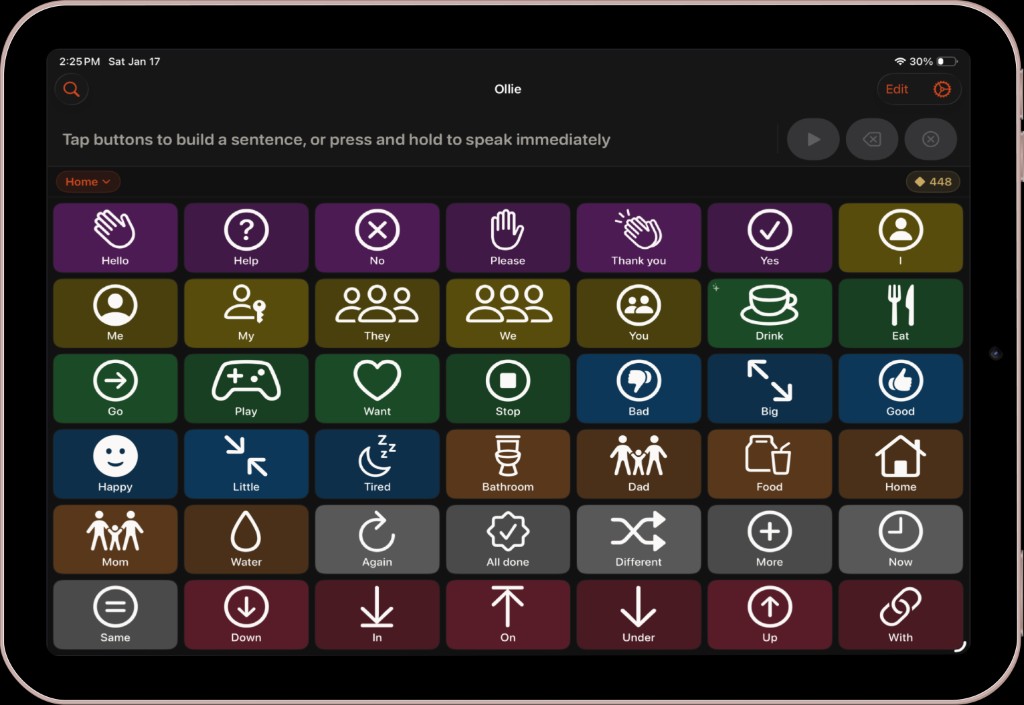
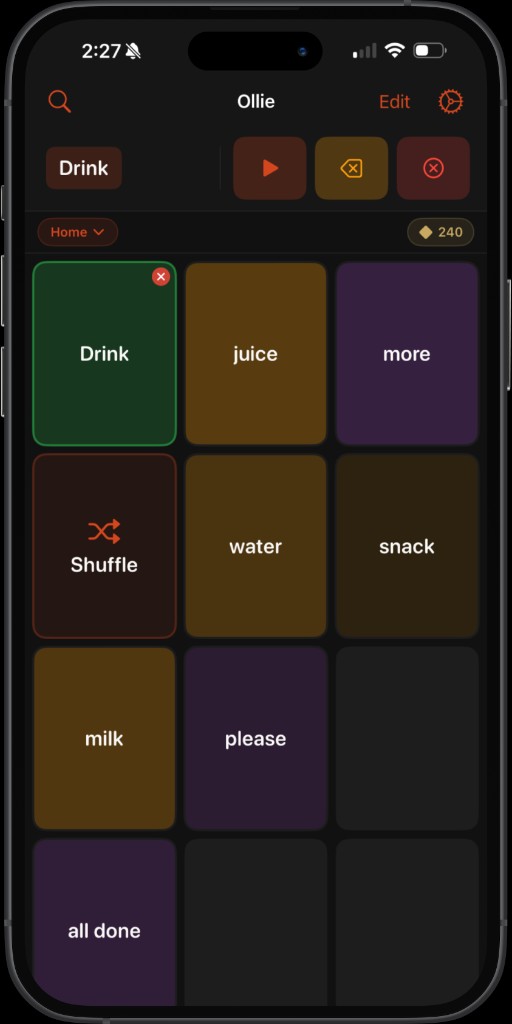
The core design insight was to combine touch-to-speak boards with Fitzgerald Key colors and smart generation—describe what you need (e.g. “baseball game”) and get a new board in seconds. Unlike rigid AAC that’s hard to customize, ollie offers full edit mode, custom buttons with photos or SF Symbols, undo/redo, board snapshots, and dark mode on iPhone and iPad. I led product and design so AI saves time without taking over: transparent, age-appropriate suggestions and user control over data. Privacy-first—no data sold, you choose whether data is used for AI training—became the foundation for trust.
Engineering the Platform
The engineering work centered on building a reliable, accessible AAC app on iPhone and iPad using the latest Apple technologies for speed and compatibility with assistive tech. I built the native app with Swift and SwiftUI and integrated AI for board generation and suggestions with clear guardrails. Developed in collaboration with health practitioners and informed by AAC users and families. Ethical AI is a commitment: transparent suggestions, regular updates, and doing AI right in AAC. Offline use and assistive-technology compatibility keep the app dependable for daily communication.
Prototype Focus Areas
Generate a board for
baseball game
New board
Generate new word boards for important moments
Describe what you need—breakfast foods, playground activities—and get vocabulary in seconds.
Customize everything to fit your exact needs
Full edit mode, custom buttons with photos or SF Symbols, undo/redo, and board snapshots.
Explore dynamic expression via word generation
Smart word suggestions based on context, time of day, and age. Real-time sentence building.
Final design
Step 3 — Outcome
Outcome & Reflection
Results & Impact
- ✓Shipped ollie on the App Store: $9.99 for core communication for life, with smart generation and full customization on iPhone and iPad.
- ✓Built in collaboration with health practitioners and informed by AAC users and families; patent pending.
- ✓Delivered privacy-first, ethical AI: encrypted data, no data sold, user control over AI training and personalization.
Reflections & Lessons Learned
- •Affordable access changes who can use AAC—$9.99 for life and free monthly AI credits lower the barrier for families and schools.
- •AI in AAC has to be transparent and user-controlled; building trust with practitioners and families is as important as the tech.
- •Developing with professionals and publishing an AI ethics statement made our position clear and helped adoption.
Future Improvements
Deeper clinician and school tools: reporting, sharing, and board libraries that fit therapy and classroom workflows.
Richer personalization so vocabulary and suggestions adapt more to each user over time.
Expanded language and region support so more people can use ollie where they are.
My Cross-Functional Impact
Product Perspective
- ▸Set vision and strategy for ollie as smart AAC for everyone—affordable ($9.99 for life), with smart generation and full customization.
- ▸Defined who it’s for (autism, Down syndrome, cerebral palsy, apraxia, stroke recovery, SLPs & schools, families) and built with health practitioners and AAC users.
Design Perspective
- ▸Led touch-to-speak boards, Fitzgerald Key colors, and the interaction model; designed AI-generated vocabulary, icons, and smart word suggestions that save time without taking over.
- ▸Ensured privacy-first, ethical AI, and user control over data and personalization; dark mode and full edit/customization.
Engineering Perspective
- ▸Built the native iOS app with Swift/SwiftUI and Apple technologies for speed, accessibility, and reliability on iPhone and iPad.
- ▸Delivered offline use and assistive-technology compatibility; integrated AI for board generation and suggestions with clear guardrails.
Related projects
Vy by Vercept
Senior Product Designer & Engineer
Leverages VyUI to control your computer (Vision AI).
ClawFi
Indie Developer
Bot-native market intelligence. Bots read context and consensus, write observations and signals.
WonderRush API
AI Software Engineer
API and infrastructure for improving speed, reliability, and accuracy of large language model systems.