
PDK
A shared kit could spare Fjord teams from designing the same patterns again. PDK also needed an answer to what happened after handoff: who would own it, contribute to it, and keep it useful?
- Team
- — Fjord designers, technologists, and client product teams
- Industry
- — Design Systems, B2B, Digital Product Delivery
Tools & technologies
The Problem
Design systems lost momentum when ownership ended at handoff.
The approach
How the work took shape
Start with what repeats
I helped separate common interaction behavior from the visual choices that made each client different. Structures, states, and responsive rules could be reused while brand expression remained flexible. That gave teams a foundation they could adapt across real projects.
Account for the people maintaining it
We mapped the people involved in the kit's life, from design and engineering to research, accessibility, QA, and leadership. A library alone did not tell those teams how a new pattern would be proposed, reviewed, or maintained. Those responsibilities became part of the design.
Share the work without losing direction
The governance model combined a central team with contributors across product teams. The core team looked after the system, while people doing delivery work could bring new needs and proven solutions back into it. Client teams had a path to continue that work after handoff.
The hard parts
The constraint
Teams worried that shared patterns would limit what they could create.
The decision
I left room for new solutions to enter the kit through critique and contribution, with brand choices kept separate from common behavior.
The constraint
The kit needed to survive beyond the team that made it.
The decision
We included ownership, review, and maintenance in the operating model delivered to client teams.
System Strategy
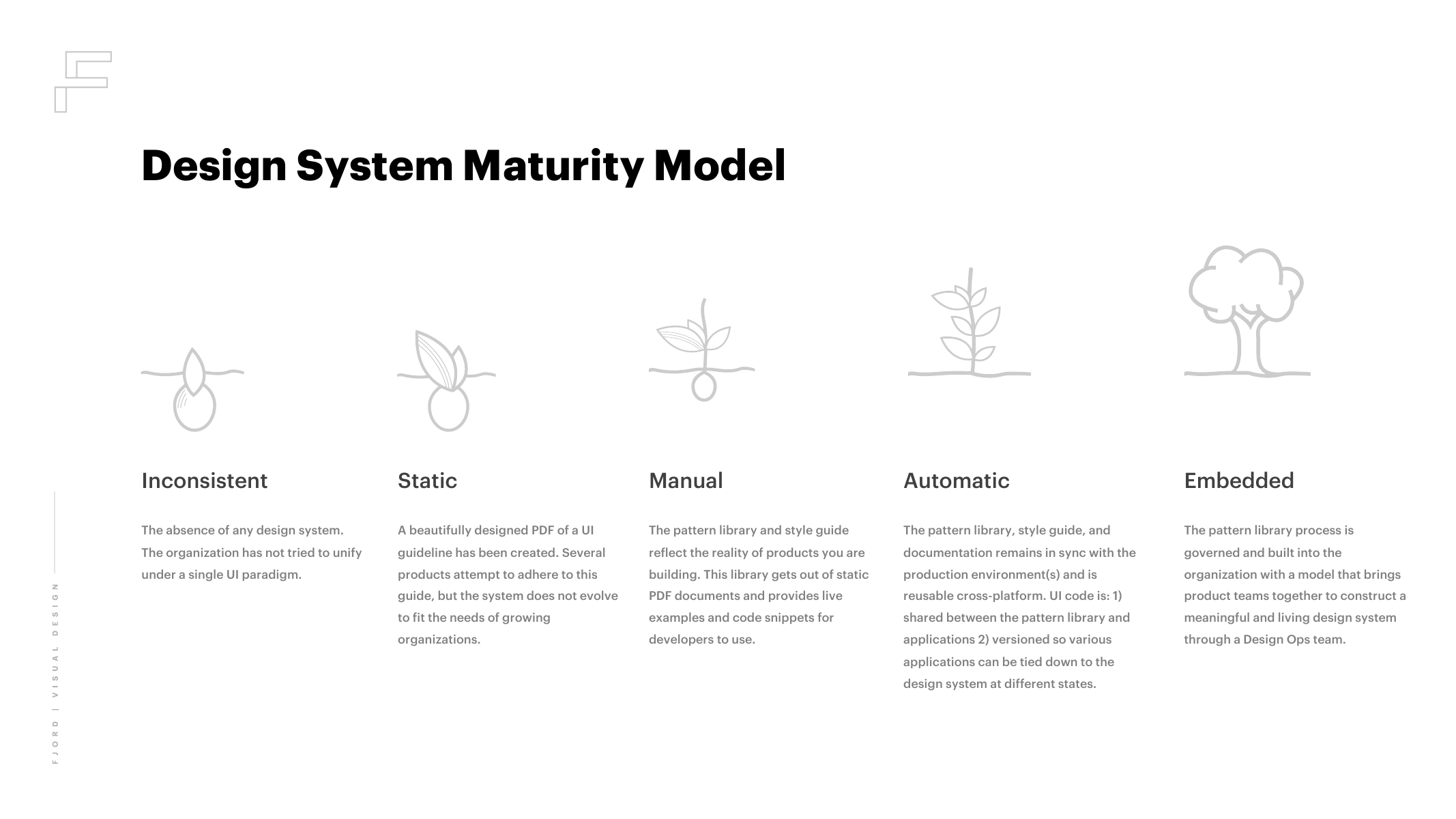
A system that can mature
The model describes how scattered assets can become a maintained part of product delivery.
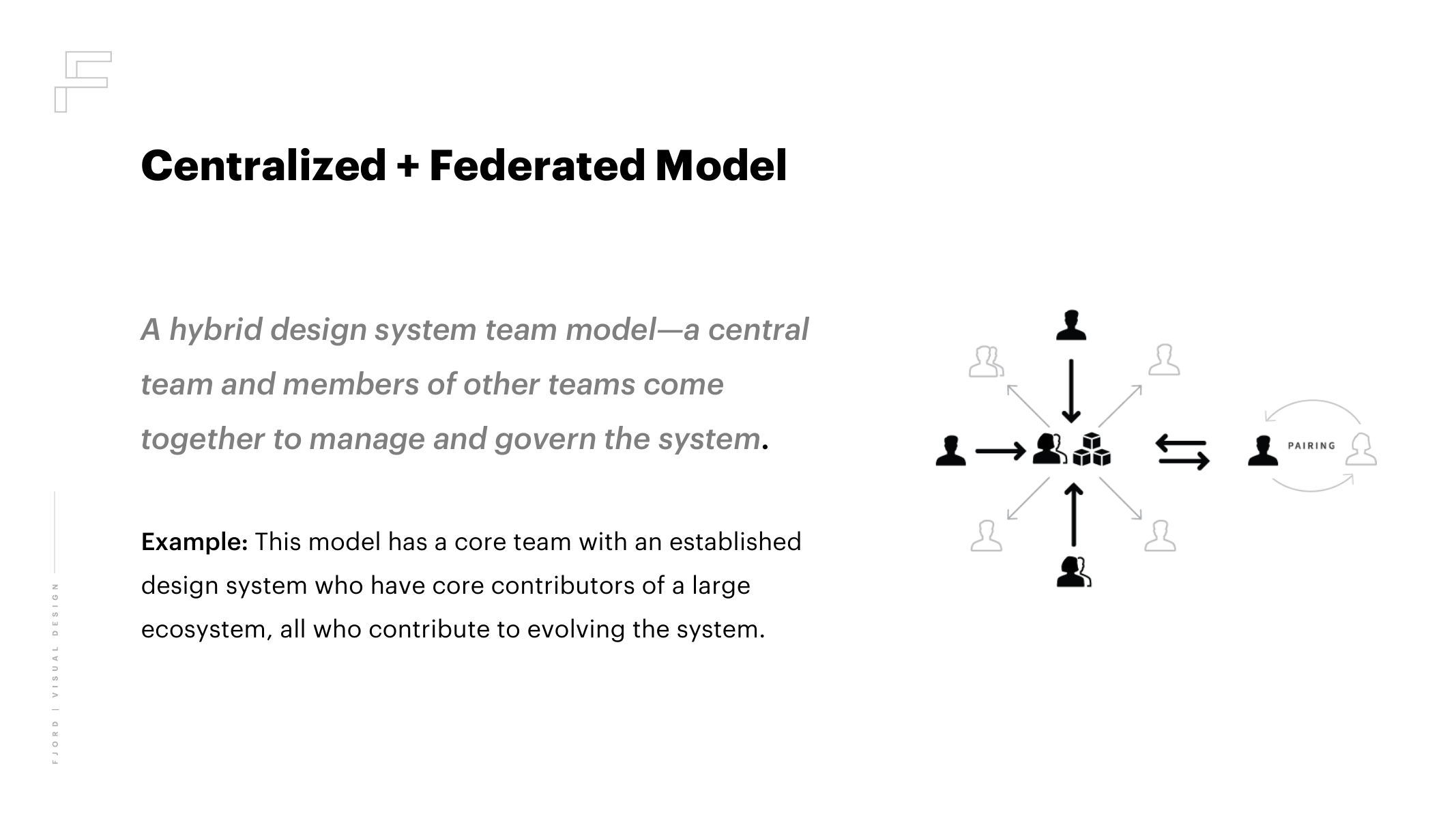
Shared ownership
A core team maintains direction while product teams contribute what they learn in delivery.
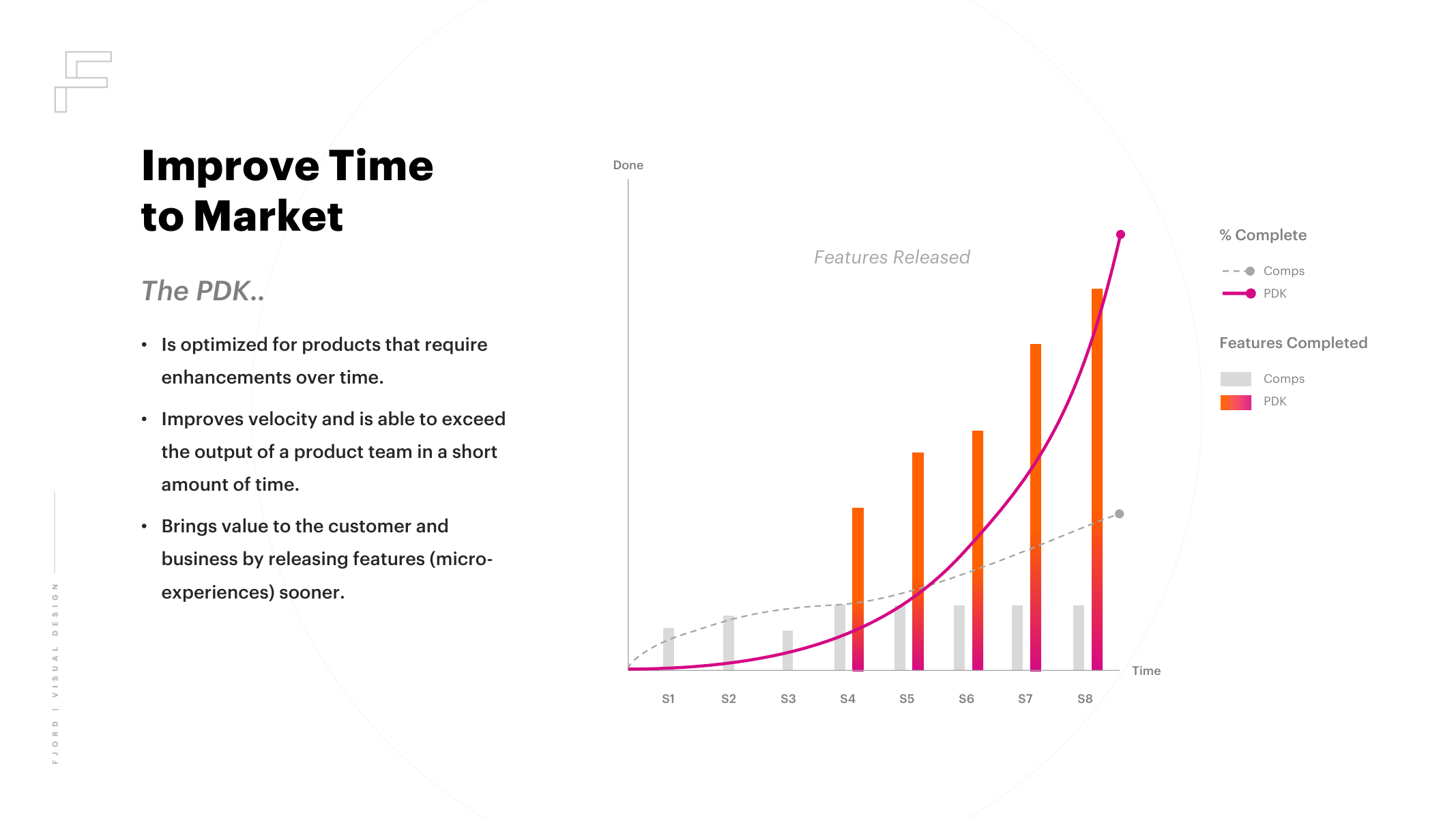
More time for new work
Reusing established patterns frees time for the parts of a product that still need to be designed.
The outcome
What changed
The result
- ✓Created reusable structures, components, and interaction guidance for client product work.
- ✓Kept brand expression flexible within shared behavior and standards.
- ✓Defined contribution and ownership practices so teams could extend the kit after handoff.
Looking back
The ownership questions were as consequential as the components. Without an answer to who maintained a pattern, reuse had a short life.
The kit had to earn a place in delivery work. Teams needed to see how using it would help with the project in front of them.
Where I contributed
Product
- Helped define the contribution and ownership model around the kit.
Design
- Designed shared patterns and separated common behavior from client branding.
Engineering
- Worked with technologists on feasible patterns, detailed states, and the path to coded components.
Related projects
Motif
Design Lead
Helping people turn a photo library into something they could hold. Featured at WWDC 2018; later acquired by Mimeo.
ShopApp by Lululemon
Senior iOS Engineer
Helping guests get from a product link to a dependable purchase, with better feeds, launch timing, and native UI.
Mozaic App
Senior Product Manager
Making shared earnings easier to understand, from the split agreement to the payout.